Showing posts with label outdoors. Show all posts

Wednesday, August 30, 2023

8/30/23 Southeastern, Michigan Fishing Report


Southeast Lower Peninsula

Lake Erie: Anglers caught yellow perch out from Stony Point in 27 feet of water on minnow perch rigs, with green being the most successful color. Walleye were few and far between unless fishing Ohio or Canadian waters. Smallmouth bass were caught in 20 feet of water using crawlers. Largemouth bass were caught using soft plastics closer into shore.

  • If you're planning on fishing out of Sterling State Park or the Brest Bay area you can pick up tackle from the nice people at Jeff's Bait & Tackle

  • If you're planning on fishing any of the canals near Lake Erie Metro Park or Point Mouillee State Game Area you can get all of your bait & tackle needs met at  Bottom Line Bait & Tackle.

Lake St. Clair: Anglers reported smallmouth bass action as slow, but using dark green baits worked well. Anglers did well in front of the Lake St. Clair Metropark in 12 to 14 feet of water. Perch anglers did fair in the Sny in 13 feet of water while fishing with artificial bait and crawlers. Walleye were caught in deep water in the channel mouths in approximately 26 feet of water.  The water was muddy in many areas due to heavy rainfall. Angers who fished near the 30 can and the St. Clair lighthouse caught some walleye and smallmouth bass. Musky anglers did not have much success but did report catching sizable northern pike in the mouth of the middle channel. 

Saginaw Bay: Heavy wind and rain kept anglers off the bay. Anglers who were able to make it out near Quanicassee struggled fishing for walleye and perch. The Sebewaing to Caseville area was also slow for walleye, with very few anglers out. 

Lower Saginaw Bay: Boat anglers fishing in the lower part of the Saginaw River were successful in catching small numbers of yellow perch using perch rigs with minnows.

Below are links to bait shop listings organized by county:  

Your area may not be listed within this fishing report so below is a list of links to pages in Southeast Michigan to help guide you to public lakes in your county.

    Thursday, August 17, 2023

    8/17/23 Northeast Lower Peninsula, Michigan Fishing Report


    Northeast Lower Peninsula

    Presque Isle: Weather conditions limited the amount of activity. Anglers who made it out caught lake trout and salmon straight out of the harbor in 70 to 150 feet of water. Fish were scattered throughout the water column so running lines at different depths worked best. The waters from the lighthouse to black point were giving up trout, Chinook salmon, steelhead and a few Atlantic salmon. Bright colored spoons ran high were taking steelhead and Atlantic salmon while watermelon-colored spoons worked well on trout and Chinook salmon lower in the water column. Walleye were reported to be scattered 20 to 35 feet down in 50 to 100 feet of water.

    Cheboygan River/Lake Huron: Smallmouth bass and pike were caught in the river with most of the pike being around or downstream of the foot bridge. Freshwater drum were still around and the first numbers of salmon should begin to enter the river soon (1-2 weeks most likely).

    Rockport: Anglers reported decent numbers of lake trout, Chinook salmon, coho and Atlantic salmon near Stoneport south to Middle Island. A wide variety of spoons and flasher/fly combos were catching fish 30 to 70 feet down in depths of 60 to 120 feet. Walleye were found suspended along the reefs and were caught on spoons and deep diving crankbaits. 

    Alpena: Anglers who fought the winds reported slow fishing as in the bay. A few walleye were caught on crankbaits in the late evenings near North Point and south near Scarecrow Island. Anglers using jigs and leaches found a few fish along the shipping channel to the mouth of the Thunder Bay. Pier anglers reported catfish and bass were caught while using crawlers and a few northern pike were caught while using crankbaits and spinnerbaits.

    Thunder Bay River: Anglers reported low fishing pressure on the river. Several anglers targeting catfish had success near Mill Island Park and below the 9th Street Bridge. Crawlers and minnows worked the best. A few were caught throughout the river on crawlers and tube jigs.

    Tawas: Anglers were targeting 60 to 65 feet of water and catching walleye, just not as many. Harvests were essentially cut in half as anglers were coming in with 3 or 4 walleye. Shore fishing at Gateway Park was producing catfish for the few anglers out there. Later in the evening, anglers were catching a walleye or two when fishing off the pier.

    Oscoda/Au Sable: Fishing pressure was low but the anglers that did make it out were fishing around 140 feet of water. Anglers were catching a couple walleye and steelhead. Anglers fishing off the pier in the early morning had the occasional luck of a walleye, but mainly caught smallmouth bass. More anglers were taking boats in the river and catching smallmouth bass, largemouth bass, pike, and at times got lucky with a walleye. Most of the catches in the river occurred in the early morning.

    Rogers City: Anglers were mostly fishing south between Calcite and Adams Point. The Chinook salmon were there but getting them to bite was difficult. The water was warm top to bottom. Anglers reported that the best fishing occurred very early or very late. Anglers were using a variety of lures from spoons to J-Plugs to attractors with flys, squids and meat rigs. Meat was starting to be very effective now with the adult salmon starting to show up. Anglers were deploying downriggers, lead core, dipseys, and copper to spread lines throughout the water column. Good colors were greens, blues, black and white, glow stuff early and late. 

    Below are links to bait shop listings organized by county:


    Your area may not be listed within this fishing report so below is a list of links to pages in Northeast Michigan to help guide you to public lakes in your county.

    Friday, June 17, 2022

    Understanding the Natural Forage of Walleye


    For many anglers walleye fishing presents itself as a bit of an enigma. The fish seem to be tucked away deep in the lakes they inhabit and those that are not easily tempted.  As a result many anglers only fish for walleye during the spring when walleye return to their usual spawning grounds making them easy to find.  However walleye fishing, just any puzzle, gets easier when you have all of the pieces. Understanding the walleyes forage base is the first piece of this puzzle.

    Just like any other fish there are two major things that impact a walleye's movements and behaviors. The first is food and the second is mating.  As a result this post will focus on the first and most consistent of these two things, food. Why? Because food determines seasonal behavioral patterns as well as matching the hatch for correct bait choice.

    Insects, Larva & Crustaceans

    Nymphs (Spring):  The first forage species is one we don't normally associate with walleye, we definitely associate them with trout but never walleye.  That food source is nymphs or insect larva.  Nymphs are widespread throughout all walleye waters. As a result a large insect hatch can pretty much shut down a walleye bite for more than a week on certain waters.

    For example the yearly mayfly hatch on the Detroit River can last upwards of 3 weeks. During which millions of mayflies hatch signaling the end of the silver bass run  and the immediate slow down of the walleye bite. During the mayfly hatch it is not uncommon to catch walleye whose stomachs are full of a mayfly larva.

    During these times catching fish of any species can get difficult. In fact many anglers stay off of the water during this time as they bite gets tough. However if you know what to do you'll still put your share of walleye in the boat.  During major hatches you'll want to down size your baits whenever possible and suspend your baits just below the hatching insects.  So slip bobber rigs with small leeches, half of a worm or buggy hair jigs like wooly bugger jigs are ideal for tempting bug eating walleye. Another tactic is to run your troll spoons like Michigan stinger spoons directly below the hatch so walleye will see the spoon as a baitfish feeding on easy to catching insects.  Normal jigging tactics will catch a few walleye but watch your electronics as they'll show you where the walleye are suspending within and below the hatch.

    Worms (year round):  Earthworms have been the quintessential fishing bait since the beginning of time.  As a result earthworms are one of the most commonly used baits for walleye.

    Nightcrawler rigging options are pretty numerous and all very simple.  For just about every worm or crawler rigging option the worms are hooked as though being hooked to a crawler harness. This is because most crawler rigs, whether to a spoon or a jig, have a crawler harness attached to them in order to use the full  worm as bait.  Below is a picture of a worm burner spoon which is a perfect example of this.

    Fishing with nightcrawlers have a couple of huge benefits.  The first being that they are widely accessible and imitated.  For example most gas stations in close proximity to lakes or rivers will sell night crawlers.  If that doesn't work a quick dig in the yard will have you overflowing with walleye bait for free.

    The second benefit is that nightcrawlers are pretty hardy.  All you have to do is keep them in a cool dark place and you'll have lively bait for quite a while. For me when I'm trolling for walleye from the kayak, I keep my crawlers in a collapsable cooler with a frozen water bottle in it to keep them cool on hot days.

    Leeches:  Leeches and walleye fishing go together like kids and candy. I don't know a walleye fisherman that does not recommend using leeches as bait at one point in the season or another. Leeches are hardy and stay active on the hook for a long time attracting bites even when you're not trolling. 

    Leeches can be rigged in multiple ways, all of which will produce under the right circumstances.  During times when walleye are found suspended leeches can be suspended below a slip bobber on jig heads to entice upward looking walleyes to bite. 

    Leeches can be trolled on bladed harnesses  above bottom bouncers, dragged above weeds with light inline weights and trolled on live bait or Lindy rigs with light weights in shallow weeds.  In deeper water a common way to fish with leeches is with a 3 way rig with the leech being trolled above twister tails or hair jigs keeping the leech trolling at desired depths.


    Crayfish (Year Around): When fishermen think of crayfish their minds often go straight to smallmouth bass, which are known for their love of crayfish.  However walleye have an affinity for crayfish as well, especially in smaller rocky river systems where the crustaceans are abundant. If you're gonna be mimicking crayfish I suggest using brown twister tails on the lightest jig head you can get away with or brown and yellow bucktail jig.  Simply jigging either of these along the bottom is often enough to entice wary walleye to bite.  If you're not too keen on jigging for walleye the rebel craw series will always but a walleye or two in the bag. 

    Amphibians

    Salamander (Spring): Every spring something special happens in every lake and pond across the globe. Amphibians decide its time to do the mating dance.  Normally when you think of amphibians mating you thinking of the hordes of toads and frogs that sing in the shallows every spring to attract a mate.  However just like frogs and toads, salamanders line the edges of lakes and ponds dancing for a mate as well.

     For us this may not seem very important but for walleye this "hatch" is very important because of when it occurs. Walleye spawn typically right after ice out on their home bodies of water which for the Detroit River and surrounding lakes is usually late March to early April.  The end of this spawn typically overlaps with beginning of the amphibian spawn which usually takes place from mid April to May.  So on bodies of water like Belleville Lake where there are decent amphibian hatches in spring.  In evening egg laying salamanders become easy pray for walleye hunting in the weeds just outside of the brush where the salamanders normally mate and attache their egg clusters.

    I've only really experienced this personally once as this isn't a major hatch but it is one that predator fish, including walleye, will take advantage of.  For me I was ending a day of kayak fishing on a local lake when I saw fish swirling on something just outside of the shallow reed line. The first thing i threw in that area was a black slug-go which immediately got gulped down the by the weirdest fighting bass I'd ever caught.  What I initially thought was a bass was a 16 inch walleye feeding on salamanders who ventured too far out from the reeds. After catching that first walleye I ended up catching two more and six bass to add to the night.

    Due to the fact that i had never caught walleye this shallow I decided to see what the heck drew the walleye to this spot. I paddled over and started looking around in the reeds with my head lamp. That's when I saw them, small black and blue salamanders swimming within the reeds or just floating on top of the water.  It was one of the coolest things ever but it also let me know that walleye are very much in tuned with their surroundings and they know where to find an easy late night snack.

    **If you are a person who plans on using any amphibians as bait. Be sure to check the regulations for your state prior to doing so as there are quite a few amphibians on the threatened list and are protected as a result**


    Frogs (Fall and Spring):  Just like every other predator fish, walleye are opportunistic feeders.  In lakes with shallow bays and lilly pad flats walleye will eat frogs whenever easily accessible. While not a primary food source, frogs particularly in the fall often fall prey to walleye as they lounge or swim through weed edges a bit too close to deeper water. 


    Baitfish

    Every die hard walleye fisherman knows that walleye and baitfish go together like peanut butter and jelly.  However what many of us miss is the differences in bait fish that will make walleye key on them over another baitfish. So when considering baitfish we need to lump them into two primary categories: Soft rayed baitfish and hard rayed baitfish. 

    Soft Rayed Baitfish

    Soft rayed baitfish are pretty much any baitfish that whose fins have soft rays like minnows, shad and gobies.  It is believed that due to this most gamefish will key on soft rayed bait before those with hard rayed dorsal fins. 


    Creek Chubs
    Creek chubs are often thought of as great pike bait. However, since creek chubs occupy the same home waters as walleye, chubs make up a substantial food base for resident walleye.  At a max size of 12 inches chubs and having no hard spines, chubs make a substantial, easy to swallow meal for large walleye. 


     Minnows
    A minnow by any other name is just a same. Not true, the name minnow is often a general term thrown out there to explain any small fish that can be used as bait.  For that reason we are gonna keep with that definition.  Pretty much any small baitfish including but not limited to actual minnows and shiners are at the top of the walleyes meal list. 

    Due to this, just about every walleye bait has a way to either use live minnows or mimic minnows in order to tempt hungry walleye. 


    Rainbow Smelt
    This non indigenous species intentionally introduced to the great lakes in 1912 has made itself at home in many walleye waters across the country.  As result walleye have gladly taken on the smelt as an easy addition to their diet.  


    Round Gobies (year around):  If you live anywhere in the great lakes. you are aware of the round goby.  An invasive fish native to Europe and the Baltic Sea introduced into the great lakes in 1990 by sea going ships traveling through inland waters.  The round goby has quickly established itself as public enemy number one of the DNR and anglers who fish the Great Lakes water shed due to their nasty desire to eat the eggs of native fish species.  However in the last few years anglers have begun to notice that large gamefish species, like walleye, have learned that gobies are definitely on the menu.  

    Gobies are bottom dwellers that prefer hard bottom areas where they can easily hide between rocks on in wholes when predators are around.  This fact has not gong unnoticed by great lakes walleye who don't hesitate to make an unwary goby a snack. 

    In areas where gobies inhabit the great lakes water shed it is illegal to fish with gobies as live bait. In fact it is highly encouraged that if caught, round gobies are immediately dispatched.  However, this doesn't mean that there are not good options for imitating round gobies when fishing for walleye.  Something as simple as an olive or brown twister tail on a jig is a great lure to tempt walleye hungry for gobies.  If twister tails aren't your thing then tubes, paddle tail baits, bucktail jigs and the Megabass Dark sleeper are all great goby imitations.  No matter what you choose to use, when you're fishing for great lakes walleye keep in mind they they're always hungry for gobies.


    Northern Lake Herring (Cisco or Tullibee):  With a range starting at the lower great lakes flowing north into northern Canada, cisco are a staple for northern walleye.  In the north country they are the quintessential gamefish food as they get to a relatively large size and are soft rayed making them easy to swallow.  In areas where cisco are a part of the ecosystem anglers troll large minnow shaped crankbaits in order to match the hatch. 


    Gizzard Shad: With a range covering more than 60 percent of the united states, shad are one of the most widespread baitfish species. For this reason they are a forage for walleye and other gamefish in most U.S.  When using shad to find walleye, seek out dams with a decent flow as the shad will ofter gather there and hungry walleye will undoubtedly be close by.  Another way to catch walleye on the shad bite is by trolling shadraps or flicker shads just below large schools of shad in open water.  Lastly the spring shad spawning runs, often coinciding with walleye runs, will always keep predator fish of all species close by gorging on the abundant shad. 

    Hard Rayed Baitfish


    Yellow Perch:  When I think of hard rayed baitfish for walleye, the first fish that pops into my head is the yellow perch.  Widely considered to be walleye candy it is not uncommon to catch walleye full of young of the year perch.  In many ecosystems this close cousin of the walleye are the primary food source for walleye.  For this reason every bait shop has baits that mimic perch.  As perch are schooling fish it's very common to find walleye close by eager to get a quick bite of perch. 


    Bluegill:
    In lake systems with abundant bluegill, walleye readily feed on bluegill when available.  As bluegill are often shallow weedy water dwelling fish, walleye often dine on them in the fall and early winter as the weeds on shallow flats and shoals die back leaving the bluegill more vulnerable to attack. 


    Monday, April 11, 2022

    Park Profile: Proud Lake Recreation Area


    Every day we grind away at work, itching to get to the weekend so we can do something we love.  If you're reading this post then kayak fishing is one of the things you love and you can't wait to get on the water whenever possible. But when you can go kayak fishing, where do you go?  Do you fish in your normal haunts or do you try some place different? Maybe turn your fishing day trip into a kayak camping trip?  Possibly you try someplace where you can target some new species of fish.  No matter what you choose, you have to decide where you'd like to go fishing.

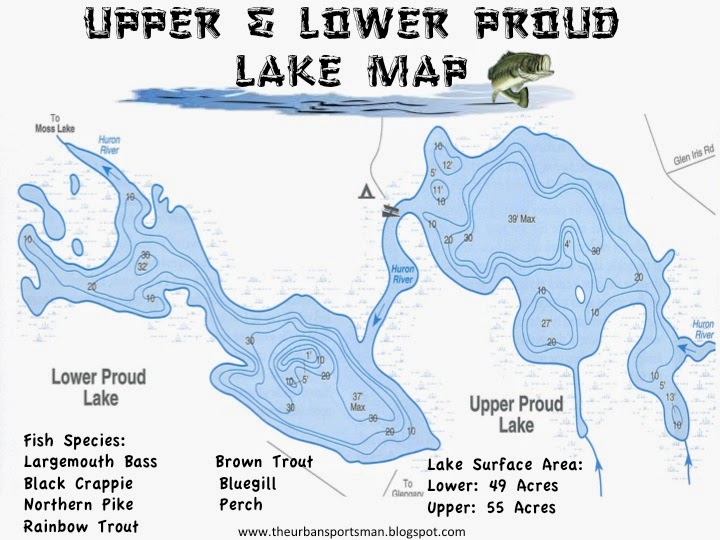
    If you're in southeast Michigan, Proud Lake Recreation Area might just be the place you try out next.  With 104 acres of fishable water between upper and lower Proud lakes there are plenty of opportunities for you to land some fish.

    Every spring the D.N.R. stocks brown and rainbow trout into the Huron river just below proud lake which draws quite a few anglers eager to catch a few trout on the fly.  Then there is the last Saturday in April which signals the opening of trout season and what some people call stock fest. This is the time when people can catch and keep the trout stocked in the Huron river and Proud lakes. This creates a unique fishing opportunity that only last a short time as anglers tend to fish the river out pretty quickly.  However, don't be dismayed because there are always a few big holdover trout hiding in the depths Proud Lake waiting to be tempted by a wayward crank bait or worm.

    If trout fishing really isn't your thing or you just can't make it out to the park in time to enjoy the trout fishing madness, don't worry.  Upper and Lower Proud Lakes are filled with plenty of gamefish including: Largemouth Bass, Black Crappie, Northern Pike, Rock Bass, Rainbow Trout, Brown Trout, Bluegill and Perch.

    Not only that, throughout the year the park's 130 camp sites are available for you to get away from home. Especially as the temperatures cool and the and the bugs begin to die off, a fall comping trip is the perfect opportunity to sneak in some hunting as well.  The two lakes are surrounded by 4000 acres of marshes, meadows, bogs, pine plantations, and large expanses of natural forest more than half of which is open to hunting.  Every September small game season opens up the hunting opportunities for game like squirrels and rabbits. Then, October comes around bringing bowhunters into the park hoping for a chance at a whitetail deer. But that's not it, the park is home to wild turkeys, pheasants, and a few species of waterfowl, so check the hunting regulations before heading to Proud Lake to with a shotgun or bow in hand. 

    If you're just looking to get your daily dose of outdoors then you might take some time to hike some of the parks 21 miles of trail system.  Walking isn't the only way to explore the beautiful scenery, horseback riding or mounting biking are great ways to increase your enjoyment.  Proud lake even host some very unique experiences year around like midnight lantern walks in winter, to see upcoming events you'll need to "like" the park facebook page.  The park has a very diverse habitat. This makes it an ideal place to bring a camera and binoculars for a little birdwatching.  

    Finally, once the snow falls and winter arrives you can do a little cross country skiing or break out the snowmobiles to zoom along the 10 miles of snow mobile paths. 

    For more information on Proud Lake Recreation Area: Click Here!


    Wednesday, February 9, 2022

    2/9/20 Northeast Lower Peninsula, Michigan Fishing Report


    Northeast Lower Peninsula


    To access the original Michigan DNR fishing Report: Click Here!

    Tawas: Perch fishing continued to be slow with some smaller fish caught in 12 to 20 feet of water off minnows and waxworms. A few walleye were caught in 15 to 22 feet of water off jigs and spoons tipped with minnows.

    Au Gres: Some small perch and walleye were caught in the Au Gres river off jigs and spoons tipped with minnows. There were some reports of walleye caught out past Pt. Au Gres (Access off Booth Rd.) in 20 to 25 feet of water off jigs and spoons tipped with minnows.

    Pine River: Perch fishing was slow with lots of sorting to keep a few. Anglers were catching perch in 5 to 10 feet of water off jigs tipped with minnows or jack hooks / spoons. Walleye anglers were venturing out as far as 1 to 5 miles, catching a few fish in 12 to 20 feet of water, off jigs and spoons tipped with minnows. The evening bite was performing the best.


    Below are links to bait shop listings organized by county:


    Your area may not be listed within this fishing report so below is a list of links to pages in Northeast Michigan to help guide you to public lakes in your county.

    Friday, December 3, 2021

    12/1/21 Southeast Michigan Fishing Report


    Southeast Lower Peninsula


    To access the original Michigan DNR fishing Report: 
    Click Here!

    Lake Erie: Several boat anglers were catching walleye around Stony Point. Anglers were trolling Bandits 60 to 110 feet back in 24 to 26 feet of water. A lot of fish were marked, but slow and steady action.

    • If you're planning on fishing any of the canals near Lake Erie Metro Park or Point Mouillee State Game Area you can get all of your bait & tackle needs met at  Bottom Line Bait & Tackle. 
    • If you're planning on fishing out of Sterling State Park or the Brest Bay area you can pick up tackle from the nice people at Jeff's Bait & Tackle

    Detroit River: If you're willing to brave the cooler temps walleye are being caught at the upper end of the river.  Anglers have been using jigs tipped with minnows and wyondotte worms while others were getting a few fish using hair jigs, blade baits and red eye shads where possible. 

    Below are links to bait shop listings organized by county:  

    Your area may not be listed within this fishing report so below is a list of links to pages in Southeast Michigan to help guide you to public lakes in your county.

    Clinton County Public Lakes: Click Here!
    Genessee County Public Lakes: Click Here!
    Hillsdale County Public Lakes: Click Here!
    Jackson County Public Lakes: Click Here!
    Lapeer County Public Lakes: Click Here!
    Lenawee County Public Lakes: Click Here!
    Livingston County Public Lakes: Click Here!
    Oakland County Public Lakes Page 1: Click Here! 
    Oakland County Public Lakes Page 2: Click Here!
    Washtenaw County Public Lakes: Click Here!
    Wayne County Public Lakes: Click Here!

    Tuesday, March 6, 2018

    Treestand Hunting Safety Tips We All Should Know


    We've all heard this one safety tip about hunting from treestands. Always wear a safety harness when hunting from a treestand!  We all tell anyone who's interested in hunting that this is the most important safety facet of treestand hunting.  Howevever there is more to safety than just wearning your harness. Preparation is just as important to insure your safety in the field as wearing a harness.

    Like all sports, hunting requires measure of preparation.  Why? Because preparation is the best way to assure that you succeed in the field, and hunting is no exception to that rule.

    In a previous hunting post we discussed the different types of treestands, however we never discussed the things required to keep us safe while hunting from a treestand.  That's the purpose of this post, to discuss the different things we need to do, in and out of season, to keep us safe while hunting from treestands.  So here we go:

    Before Hunt:
    Inspect Tree Steps, Climbing Sticks & Ladders: Whether your treestands and their parts are new or old you should be inspecting every inch of the stands. For me, that means starting with the items that are gonna get me up the tree.  The first things I inspect are any treesteps or ladders that I'm gonna use to climb the tree.   When I'm inspecting my steps and ladders I'm looking for these things:

    • Rust spots - Any places that have rust spots (especially weld points) get sanded down, reprimed and painted with rust inhibiting spray paint.  If it's rusted through too thouroughly then I begin to consider replacing the item where possible.  But my last option is welding replacement pieces on to stands or ladders. 
    • Peeling Grit Tape - Replacing the grit tape the most commonly replaced item on my stands and ladders. For $4.00 at home depot I can replace an item on my stand that will aid me in staying stable when I'm hunting in wet conditions.  A couple minutes to peel the old tape off a wipe down with some soap and water or goo-gone to remove the excess old glue and I'm good to go to add the new grit tape. 
    • Broken, Rusty or Defective Nuts & Bolts - Any nuts and bolts that are rusty, broken or defective get replaced immediately.  However I don't just go to walmart and buy nuts and bolts of the same size. I go to a hardware store and try to match the nuts and bolts exactly and spray them down with rust inhibitor before placing them in my stands. 
    • Frayed or Cut Straps - If the straps that hold my steps or ladders have any wear or rips in
      them I replace them immediately.  A trip to any craft store and I have more than enough feet of straps to replace the ones that are damaged.  Simply by replacing the straps you are making sure your tree steps are stands dont shift or fall upon having your weight added to them. 
    • Damaged Ratchets - Since ratchets are the only moving parts on your tree steps, climbing sticks or ladders I make sure I'm meticulous about checking for rust every where.  Since this parts move that means there will be a combination of friction and rust which can team up to give me a bad fall if not taken care of.  So any damaged or rusty ratchets get the boot and replaced. In the case of the straps that have plastic strap adjusters that cause the straps to lock into place, if they are cracked I replace those as well.  Joann Fabrics and Michaels craft stores carry the plastic strap adjusters in any size you need. 


    Inspect Harness (Continuously): Your safety harness is the only thing stopping you from coming to an abrupt halt if you fall from your treestand.  As a result it is the most important item in your hunting gear and as such needs to be checked continuously for damage.  In the case of my safety harnesses, if they have any damage I dont repair them I replace them.  However in the case of vest style full body harnesses miner wear and tear can be fixed via your local taylor. Also they carabiners that lock to the tree can easily be replaced but if you're going to replace them don't skimp on carabiner.  Go to a store that sells professional climbing gear and get a good one.  You won't be upset with what you get, the carabiners that rock climbers use are equal in strength to the originals or stronger and ofter much lighter in weight.

    Inspect and practice with your linemans belt: If you're like me and end up placing multiple stands each year or your use portable climbing sticks to hang stands on public land, you'll want to learn how to use a lineman's belt.  Pretty much what lineman's belt does is climb with you while you'r ascending and descending your tree.  Why is this important? Because most falls from a treestand occur when you're climbing up or descending your tree and the lineman's belt gives you a lifeline during those times. So if you're using a lineman's belt You're checking for the very same things that you are on safety harness.  Below is a video of who you can make your own lineman's belt and below that is a list of the materials need with links to where you can purchase.


    Lineman's Belt Materials:
    • 11mm static mountain climbing rope click here
    • Ropeman ascender  click here
    • 7mm static mountain climbing rope if using a prusik knot click here
    • 3 Aluminum climbing carabiner click here


    Practice Setting Up and Using Your Stands: Once you've checked and repaired all of your equipment the next thing that should be on your list of to do's is to practice using your stands and harnesses. Practicing setting up my stands before the hunting season helps me in a couple of ways.  First it gets me familiar with the parts of my stands thus making it easier to set them up quickly and quietly when I'm in the field.  Secondly when it comes to my climbers and hang on stands it allows me to see if there are any things I can do eliminate unecessary noise produced while setting up or walking to stand.

    Practice Self Rescue: The worst thing that can happen while you're out hunting is that you can fall out of your stand.  Even with a harness falling from a stand can be a painful ordeal not only that but a difficult ordeal to get yourself out of.  So one of the things I do is I practice self rescues with all of my gear on before I get into the field.

    By practicing self rescues you learn more than anything what you need as an outdoorsmen or woman to keep yourself safe up in the tree.  While hanging a safe distance from the ground you'll learn if you're muscles are not capable of pulling yourself upright.  Also you'll see if, upon a fall, your harness will actually keep you from hanging upside down and if not you'll quickly start trying to trouble shoot this problem.  You'll also learn if your upon a fall you'll learn to recognize how high you should have your tether rope attached to the tree.  By knowing this you can place your tether rope at a height that makes it easier for you to get back into stand safely.

    Lastly, by practicing self rescues you'll give yourself the knowledge to quickly get yourself back on stand after a fall without having to do any major problem solving. Hopefully because you've seen all of the possible problems that could happen from a safe height.


    During Hunt:

    Select safe tree
    The first part of selecting your tree is knowing what you're looking for in a tree.
    1. Look for trees that are alive, so dont climb trees with dead limbs or that are wrapped in vines.
    2. Choose straight trees or trees that lean slightly backwards
    3. For Climing Stands avoid trees with smooth bark that have bark that strips off easily


    Once you've selected your tree make sure you take time to climb your tree before actual hunting season starts.  This will give you the opportunity to do a these essential things:

    • check for any shooting lanes that need to be cut from your line of sight.  
    • clear any limbs that will stop you from getting to the height you want to hunt from. 
    • Install any screws or hanging aids you'll need while hunting
    Once you've set up your treestand and are ready to get into the field. Make sure when climbing you're using the 3 point rule when ascending or descending stand.  (Three limbs are always in contact with the tree) Not only this but make sure you're using your linemans rope and climbing without your equipment attached to you.  Any equipment attached to you when you're climbing your tree can throw off your balance causing you to fall.  Simply use a haul rope for your extras, it'll save you pain and expense in the long run. 

    When not to hunt from a treestand. 
    • If you're already fatigued dont hunt from a treestand.  Fatigue can be a killer if you need to practice a self rescue from 20 feet up. 
    • Finally if you it is raining with thunder and lightning do not climb up into a metal stand making yourself into a giant lightning rod. 


    Quick Tips:
    • If using strap on tree steps, leave your highest steps in the tree so you have less to put up in the darkness when hunting. 
    • Set up your tree steps a couple of feet above your stand so you can step down into the stand rather than pulling yourself up. 
    • Use screw in steps for hanging equipment above your stand, not as steps to climb
    • Screw in steps can shatter under extremely cold conditions
    • Screw in steps set below your stand can inpale you if you fall from your tree
    • If you're using a climbng stand ascend and descend only 12 inches at a time
    • A small piece of carpetting on the stand floor quiets the stand, warms your feet and makes it less slippery
    • Make sure someone knows where you'll be hunting and how long you'll be hunting
    • Always wear a safety harness when hunting from a treestand 

    Tuesday, December 5, 2017

    Top Baits For Catching Channel Catfish


    Channel catfish are one of the most widespread game fish species in the united states.  Wide spread, game fighters and easily topping the 10 lbs, channel cats are the favorite of many fishermen and women.  In fact they are the first large species I've introduced my family to. Needless to say they love catching big cats.  Not just for the fun of it but also because how easy it is to find bait for them.  A couple minutes digging in the dirt or a quick trip to the grocery store and we're all baited up and ready to go.  For this reason I wanted to share my top five baits for channel catfish.

    Worms 
    Possibly every child's first fishing experience includes the use of worms. Why wouldn't worms be a part of our childhood fishing memories?  You can find them anywhere there is dirt and a simple stick used as a shovel will help you fill a container with enough bait to fish all day.  Not only that but you can pretty much catch any kind of fish on a worm and channel catfish are no different.

    When fishing for catfish with worms, size matters. Because worms produce a lot of by-catch you want to use as large a worm as possible when targeting catfish. If you don't have large night crawlers on hand you can simply thread multiple night crawlers on your hook in order to present a larger meal for catfish.

    Use a slip sinker rig for deeper and faster moving waters in order to keep your bait along bottom.  And in cases were the water your fishing is rocky or very snaggy use walleye floats to lift your hook above the snags.  Also when fishing fast moving waters make sure you're using no roll sinkers which do a better job of holding your bait in one spot.

    On the other hand in still water you can use either slip sinker rig or a slip bobber rig.  When using this right you're gonna use split shot to get your bait just above the bottom where it'll avoid snags.


    Chicken Livers
    Next to worms chicken livers are probably the easiest bait to find. No, you can't dig them up in the backyard but what you can do is pick up a container of chicken livers in just about any grocery store in the country.  At a price under $3.00 they are affordable for fishermen and women with even the most modest of budgets.

    Due to their consistency, chicken livers are best baited on treble hooks or bait holder hooks. When using treble hooks just pack and wrap on as much chicken liver as you'd prefer.  However in the case of using bait holder hooks there are two ways to rig up chicken livers effectively. The first way is to put the livers in the freezer for a short amount of time.  The partially frozen livers will be firm enough to easily grab and thread on to your bait holder hooks. The other way is to wrap your chicken livers in spawn sacs and hook them that way. Using Spawn sacs is by far the best way to do it as the sacs will
    hold chicken livers on the hook longer, even when there are smaller bait stealing fish around to peck at your livers.


    Dip / Dough Baits
    As a kid one of my grandmother's neighbors would always talk to me about his dip bait recipe that would catch every catfish around.  When I was kid hearing this had me mesmerized with thoughts of catching huge catfish, larger than anything I'd ever seen. If you're like me you've heard of or know of someone who has they're own dip bait recipe that they swear by. It's for this reason that dip baits make my top baits list.

    I'm sure there are countless recipes for dip baits that are just a google search away.  However if you don't want to deal with the process of making your own, then powerbait makes a great version of catfish dip bait.  Also if you're gonna fish with dip bait you wanna use a treble hook made specifically for it.  There are many version of hooks made for dip bait, some with plastic casing and some with just a wire coil around the hook shank to hold the dip bait to the hook. Lastly if your're gonna use dip or dough baits in high currents use spawn sacs to keep pre-rolled dip baits attached to your hook.  As well when fishing in snaggy areas simply adding a couple walleye floats to your line will lift  your treble hooks out of the rocks yet still in the strike zone.


    Cut bait
    For me cut bait is a weapon of opportunity rather than a bait of quick choice. If I happen to catch the shad die off on time or if I have some by-catch like bluegill while I'm fishing then that's when I'll opt for cut bait.  However just because I don't run to it as my bait of choice doesn't mean its not extremely effective.  In fact I have a few friends whom will pretty much only use cut bait for large channel cats.

    Due to its size cut bait is a great bait to use for weeding through smaller fish to get to the bigger fish waiting to be caught.  For this reason I believe cut bait is not just effective for catching large channel catfish but blues and flat heads as well.  With the size of the bait in mind you want to use hooks that can accommodate cut bait. For this reason I recommend bait holder or circle hooks sized #4 to #5/0.  large circle hooks are more than able to hold large and small pieces of cut bait on with out the bait hindering your hookup ratio.

    When using cut bait you'll find that some pieces work better than others.  In my experience is that the head of any fish you catch is gonna be your most choice piece of bait for pretty much any species of catfish. The head is followed by the stomach, with the internal organs inside, as the next best piece to use.  However something I do when I have the opportunity to catch and prepare cut bait early is I let it soak in the blood from chicken livers to give it more smell in the water.  I've found that this helps me keep the bite going a little better when catfish tend to slow down biting.


    Shrimp
    Shrimp is the last of my top five baits for channel catfish.  It came in last not because it lacks in catching ability behind any of the other four baits but because I'm allergic to shrimp.  As a result this requires me using gloves to rig shrimp up which is just bit of a pain to me.

    Allergies aside though, shrimp is an extremely effective bait for channel catfish.  Not only is it effective but it is easy to find, a simple trip to any super market will have you in a bag of bait.

    If you're gonna use shrimp as bait you wanna keep a couple things in mind.  First thing is to remove the shell from the shrimp as it will hinder hook ups.  Second is to use either bait holder or circle hooks sized #4 to 1/0, there really is no need to go much larger as the shrimp are only gonna be so big.  Third, if you find that you're getting bites but not hooking up, pinch off some of the shrimp as the size of the shrimp may be inhibiting your hook ups.  Lastly fresh shrimp tends to work best in my experience so keep it as fresh as you can.

    Thanks for reading my short list of my top choices for channel catfish bait.  Please let me know in the comments below what your favorite channel catfish baits are.


    LinkWithin

    Related Posts Plugin for WordPress, Blogger...