For many anglers walleye fishing presents itself as a bit of an enigma. The fish seem to be tucked away deep in the lakes they inhabit and those that are not easily tempted. As a result many anglers only fish for walleye during the spring when walleye return to their usual spawning grounds making them easy to find. However walleye fishing, just any puzzle, gets easier when you have all of the pieces. Understanding the walleyes forage base is the first piece of this puzzle.
Just like any other fish there are two major things that impact a walleye's movements and behaviors. The first is food and the second is mating. As a result this post will focus on the first and most consistent of these two things, food. Why? Because food determines seasonal behavioral patterns as well as matching the hatch for correct bait choice.
Insects, Larva & Crustaceans
 Nymphs (Spring): The first forage species is one we don't normally associate with walleye, we definitely associate them with trout but never walleye. That food source is nymphs or insect larva. Nymphs are widespread throughout all walleye waters. As a result a large insect hatch can pretty much shut down a walleye bite for more than a week on certain waters.
For example the yearly mayfly hatch on the Detroit River can last upwards of 3 weeks. During which millions of mayflies hatch signaling the end of the silver bass run and the immediate slow down of the walleye bite. During the mayfly hatch it is not uncommon to catch walleye whose stomachs are full of a mayfly larva.
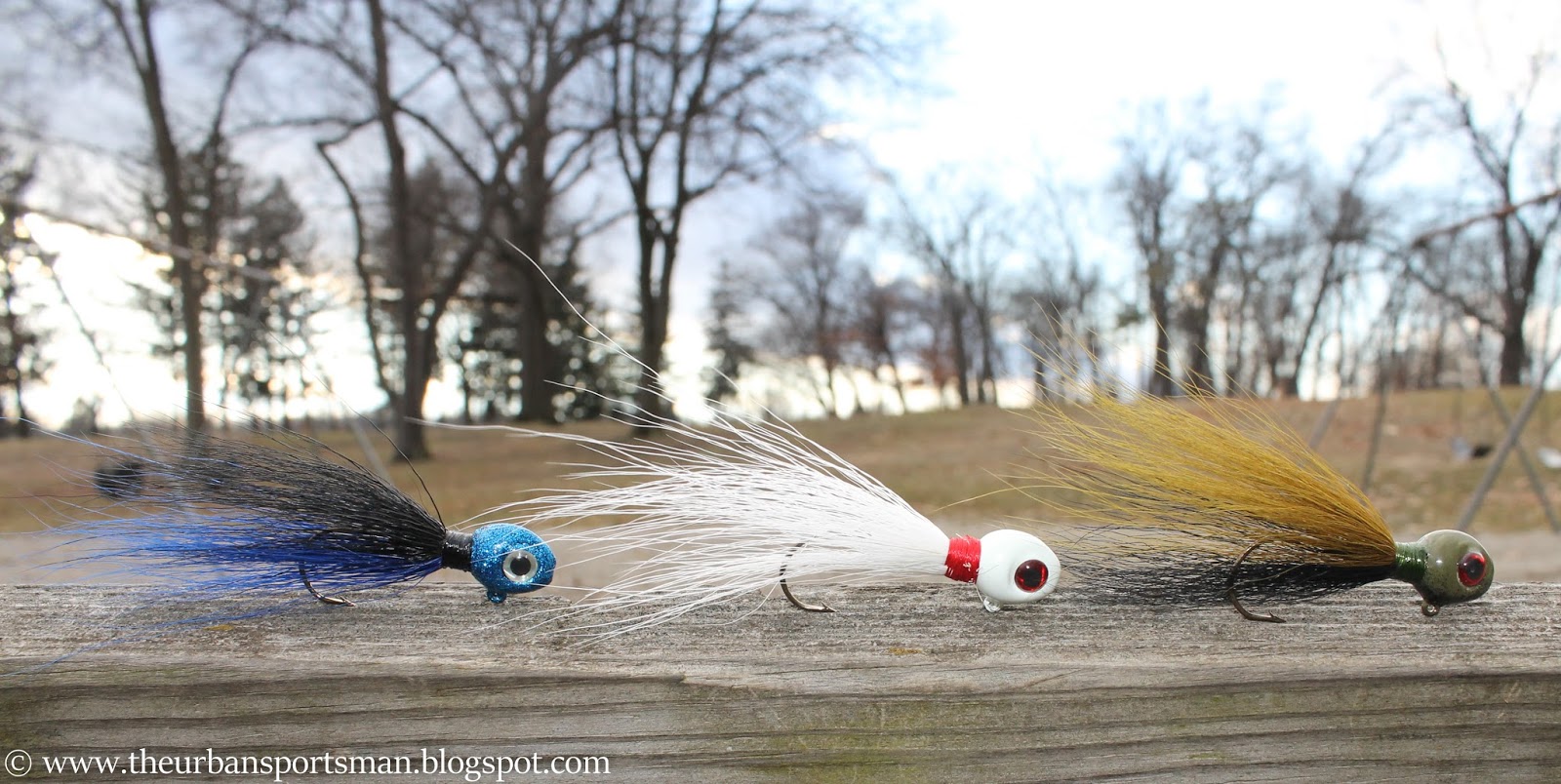
During these times catching fish of any species can get difficult. In fact many anglers stay off of the water during this time as they bite gets tough. However if you know what to do you'll still put your share of walleye in the boat. During major hatches you'll want to down size your baits whenever possible and suspend your baits just below the hatching insects. So slip bobber rigs with small leeches, half of a worm or buggy hair jigs like wooly bugger jigs are ideal for tempting bug eating walleye. Another tactic is to run your troll spoons like Michigan stinger spoons directly below the hatch so walleye will see the spoon as a baitfish feeding on easy to catching insects. Normal jigging tactics will catch a few walleye but watch your electronics as they'll show you where the walleye are suspending within and below the hatch.
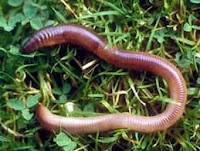 Worms (year round): Earthworms have been the quintessential fishing bait since the beginning of time. As a result earthworms are one of the most commonly used baits for walleye.
Nightcrawler rigging options are pretty numerous and all very simple. For just about every worm or crawler rigging option the worms are hooked as though being hooked to a crawler harness. This is because most crawler rigs, whether to a spoon or a jig, have a crawler harness attached to them in order to use the full worm as bait. Below is a picture of a worm burner spoon which is a perfect example of this.

Fishing with nightcrawlers have a couple of huge benefits. The first being that they are widely accessible and imitated. For example most gas stations in close proximity to lakes or rivers will sell night crawlers. If that doesn't work a quick dig in the yard will have you overflowing with walleye bait for free.
The second benefit is that nightcrawlers are pretty hardy. All you have to do is keep them in a cool dark place and you'll have lively bait for quite a while. For me when I'm trolling for walleye from the kayak, I keep my crawlers in a collapsable cooler with a frozen water bottle in it to keep them cool on hot days.
 Nymphs (Spring): The first forage species is one we don't normally associate with walleye, we definitely associate them with trout but never walleye. That food source is nymphs or insect larva. Nymphs are widespread throughout all walleye waters. As a result a large insect hatch can pretty much shut down a walleye bite for more than a week on certain waters.
For example the yearly mayfly hatch on the Detroit River can last upwards of 3 weeks. During which millions of mayflies hatch signaling the end of the silver bass run and the immediate slow down of the walleye bite. During the mayfly hatch it is not uncommon to catch walleye whose stomachs are full of a mayfly larva.
During these times catching fish of any species can get difficult. In fact many anglers stay off of the water during this time as they bite gets tough. However if you know what to do you'll still put your share of walleye in the boat. During major hatches you'll want to down size your baits whenever possible and suspend your baits just below the hatching insects. So slip bobber rigs with small leeches, half of a worm or buggy hair jigs like wooly bugger jigs are ideal for tempting bug eating walleye. Another tactic is to run your troll spoons like Michigan stinger spoons directly below the hatch so walleye will see the spoon as a baitfish feeding on easy to catching insects. Normal jigging tactics will catch a few walleye but watch your electronics as they'll show you where the walleye are suspending within and below the hatch.
 Worms (year round): Earthworms have been the quintessential fishing bait since the beginning of time. As a result earthworms are one of the most commonly used baits for walleye.
Nightcrawler rigging options are pretty numerous and all very simple. For just about every worm or crawler rigging option the worms are hooked as though being hooked to a crawler harness. This is because most crawler rigs, whether to a spoon or a jig, have a crawler harness attached to them in order to use the full worm as bait. Below is a picture of a worm burner spoon which is a perfect example of this.

Fishing with nightcrawlers have a couple of huge benefits. The first being that they are widely accessible and imitated. For example most gas stations in close proximity to lakes or rivers will sell night crawlers. If that doesn't work a quick dig in the yard will have you overflowing with walleye bait for free.
The second benefit is that nightcrawlers are pretty hardy. All you have to do is keep them in a cool dark place and you'll have lively bait for quite a while. For me when I'm trolling for walleye from the kayak, I keep my crawlers in a collapsable cooler with a frozen water bottle in it to keep them cool on hot days.
 Leeches: Leeches and walleye fishing go together like kids and candy. I don't know a walleye fisherman that does not recommend using leeches as bait at one point in the season or another. Leeches are hardy and stay active on the hook for a long time attracting bites even when you're not trolling.
 Leeches can be rigged in multiple ways, all of which will produce under the right circumstances. During times when walleye are found suspended leeches can be suspended below a slip bobber on jig heads to entice upward looking walleyes to bite.
Leeches can be trolled on bladed harnesses above bottom bouncers, dragged above weeds with light inline weights and trolled on live bait or Lindy rigs with light weights in shallow weeds. In deeper water a common way to fish with leeches is with a 3 way rig with the leech being trolled above twister tails or hair jigs keeping the leech trolling at desired depths.

Amphibians

For us this may not seem very important but for walleye this "hatch" is very important because of when it occurs. Walleye spawn typically right after ice out on their home bodies of water which for the Detroit River and surrounding lakes is usually late March to early April. The end of this spawn typically overlaps with beginning of the amphibian spawn which usually takes place from mid April to May. So on bodies of water like Belleville Lake where there are decent amphibian hatches in spring. In evening egg laying salamanders become easy pray for walleye hunting in the weeds just outside of the brush where the salamanders normally mate and attache their egg clusters.
I've only really experienced this personally once as this isn't a major hatch but it is one that predator fish, including walleye, will take advantage of. For me I was ending a day of kayak fishing on a local lake when I saw fish swirling on something just outside of the shallow reed line. The first thing i threw in that area was a black slug-go which immediately got gulped down the by the weirdest fighting bass I'd ever caught. What I initially thought was a bass was a 16 inch walleye feeding on salamanders who ventured too far out from the reeds. After catching that first walleye I ended up catching two more and six bass to add to the night.
Due to the fact that i had never caught walleye this shallow I decided to see what the heck drew the walleye to this spot. I paddled over and started looking around in the reeds with my head lamp. That's when I saw them, small black and blue salamanders swimming within the reeds or just floating on top of the water. It was one of the coolest things ever but it also let me know that walleye are very much in tuned with their surroundings and they know where to find an easy late night snack.
**If you are a person who plans on using any amphibians as bait. Be sure to check the regulations for your state prior to doing so as there are quite a few amphibians on the threatened list and are protected as a result**
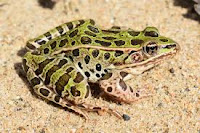 Frogs (Fall and Spring): Just like every other predator fish, walleye are opportunistic feeders. In lakes with shallow bays and lilly pad flats walleye will eat frogs whenever easily accessible. While not a primary food source, frogs particularly in the fall often fall prey to walleye as they lounge or swim through weed edges a bit too close to deeper water.
Baitfish
Every die hard walleye fisherman knows that walleye and baitfish go together like peanut butter and jelly. However what many of us miss is the differences in bait fish that will make walleye key on them over another baitfish. So when considering baitfish we need to lump them into two primary categories: Soft rayed baitfish and hard rayed baitfish.

Baitfish
Every die hard walleye fisherman knows that walleye and baitfish go together like peanut butter and jelly. However what many of us miss is the differences in bait fish that will make walleye key on them over another baitfish. So when considering baitfish we need to lump them into two primary categories: Soft rayed baitfish and hard rayed baitfish.
Soft Rayed Baitfish
Soft rayed baitfish are pretty much any baitfish that whose fins have soft rays like minnows, shad and gobies. It is believed that due to this most gamefish will key on soft rayed bait before those with hard rayed dorsal fins.
Creek Chubs

Creek chubs are often thought of as great pike bait. However, since creek chubs occupy the same home waters as walleye, chubs make up a substantial food base for resident walleye. At a max size of 12 inches chubs and having no hard spines, chubs make a substantial, easy to swallow meal for large walleye.
Minnows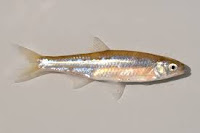 A minnow by any other name is just a same. Not true, the name minnow is often a general term thrown out there to explain any small fish that can be used as bait. For that reason we are gonna keep with that definition. Pretty much any small baitfish including but not limited to actual minnows and shiners are at the top of the walleyes meal list.
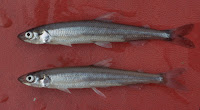
 Round Gobies (year around): If you live anywhere in the great lakes. you are aware of the round goby. An invasive fish native to Europe and the Baltic Sea introduced into the great lakes in 1990 by sea going ships traveling through inland waters. The round goby has quickly established itself as public enemy number one of the DNR and anglers who fish the Great Lakes water shed due to their nasty desire to eat the eggs of native fish species. However in the last few years anglers have begun to notice that large gamefish species, like walleye, have learned that gobies are definitely on the menu.
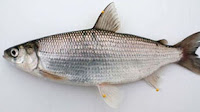 Northern Lake Herring (Cisco or Tullibee): With a range starting at the lower great lakes flowing north into northern Canada, cisco are a staple for northern walleye. In the north country they are the quintessential gamefish food as they get to a relatively large size and are soft rayed making them easy to swallow. In areas where cisco are a part of the ecosystem anglers troll large minnow shaped crankbaits in order to match the hatch.
 Gizzard Shad: With a range covering more than 60 percent of the united states, shad are one of the most widespread baitfish species. For this reason they are a forage for walleye and other gamefish in most U.S. When using shad to find walleye, seek out dams with a decent flow as the shad will ofter gather there and hungry walleye will undoubtedly be close by. Another way to catch walleye on the shad bite is by trolling shadraps or flicker shads just below large schools of shad in open water. Lastly the spring shad spawning runs, often coinciding with walleye runs, will always keep predator fish of all species close by gorging on the abundant shad.
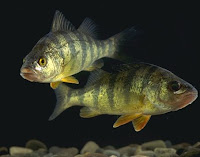
Yellow Perch: When I think of hard rayed baitfish for walleye, the first fish that pops into my head is the yellow perch. Widely considered to be walleye candy it is not uncommon to catch walleye full of young of the year perch. In many ecosystems this close cousin of the walleye are the primary food source for walleye. For this reason every bait shop has baits that mimic perch. As perch are schooling fish it's very common to find walleye close by eager to get a quick bite of perch.
.jpeg)
Bluegill: In lake systems with abundant bluegill, walleye readily feed on bluegill when available. As bluegill are often shallow weedy water dwelling fish, walleye often dine on them in the fall and early winter as the weeds on shallow flats and shoals die back leaving the bluegill more vulnerable to attack.
 A minnow by any other name is just a same. Not true, the name minnow is often a general term thrown out there to explain any small fish that can be used as bait. For that reason we are gonna keep with that definition. Pretty much any small baitfish including but not limited to actual minnows and shiners are at the top of the walleyes meal list.
 Due to this, just about every walleye bait has a way to either use live minnows or mimic minnows in order to tempt hungry walleye.

Rainbow Smelt
This non indigenous species intentionally introduced to the great lakes in 1912 has made itself at home in many walleye waters across the country. As result walleye have gladly taken on the smelt as an easy addition to their diet.
 Round Gobies (year around): If you live anywhere in the great lakes. you are aware of the round goby. An invasive fish native to Europe and the Baltic Sea introduced into the great lakes in 1990 by sea going ships traveling through inland waters. The round goby has quickly established itself as public enemy number one of the DNR and anglers who fish the Great Lakes water shed due to their nasty desire to eat the eggs of native fish species. However in the last few years anglers have begun to notice that large gamefish species, like walleye, have learned that gobies are definitely on the menu.
 Gobies are bottom dwellers that prefer hard bottom areas where they can easily hide between rocks on in wholes when predators are around. This fact has not gong unnoticed by great lakes walleye who don't hesitate to make an unwary goby a snack.
In areas where gobies inhabit the great lakes water shed it is illegal to fish with gobies as live bait. In fact it is highly encouraged that if caught, round gobies are immediately dispatched. However, this doesn't mean that there are not good options for imitating round gobies when fishing for walleye. Something as simple as an olive or brown twister tail on a jig is a great lure to tempt walleye hungry for gobies. If twister tails aren't your thing then tubes, paddle tail baits, bucktail jigs and the Megabass Dark sleeper are all great goby imitations. No matter what you choose to use, when you're fishing for great lakes walleye keep in mind they they're always hungry for gobies.
 Northern Lake Herring (Cisco or Tullibee): With a range starting at the lower great lakes flowing north into northern Canada, cisco are a staple for northern walleye. In the north country they are the quintessential gamefish food as they get to a relatively large size and are soft rayed making them easy to swallow. In areas where cisco are a part of the ecosystem anglers troll large minnow shaped crankbaits in order to match the hatch.
  Gizzard Shad: With a range covering more than 60 percent of the united states, shad are one of the most widespread baitfish species. For this reason they are a forage for walleye and other gamefish in most U.S. When using shad to find walleye, seek out dams with a decent flow as the shad will ofter gather there and hungry walleye will undoubtedly be close by. Another way to catch walleye on the shad bite is by trolling shadraps or flicker shads just below large schools of shad in open water. Lastly the spring shad spawning runs, often coinciding with walleye runs, will always keep predator fish of all species close by gorging on the abundant shad.
 Hard Rayed Baitfish

Yellow Perch: When I think of hard rayed baitfish for walleye, the first fish that pops into my head is the yellow perch. Widely considered to be walleye candy it is not uncommon to catch walleye full of young of the year perch. In many ecosystems this close cousin of the walleye are the primary food source for walleye. For this reason every bait shop has baits that mimic perch. As perch are schooling fish it's very common to find walleye close by eager to get a quick bite of perch.
.jpeg)
Bluegill: In lake systems with abundant bluegill, walleye readily feed on bluegill when available. As bluegill are often shallow weedy water dwelling fish, walleye often dine on them in the fall and early winter as the weeds on shallow flats and shoals die back leaving the bluegill more vulnerable to attack.