
|

|

South Haven: Boat anglers had another successful week of fishing. Salmon and trout were caught in 80 to 100 feet of water. Rotators and flies along with meat rigs were performing very well. Perch anglers had some decent catches. The most productive depth was around 30 feet of water. Pier fishing was a little slow for all species.
St. Joseph: Perch were caught in 35 feet of water. Most of the fishing pressure was south of the piers. Salmon anglers had rough conditions. There were some trout caught and a few salmon inside of 80 feet of water. Pier fishing was also compromised by the rough waves. Fishing for all species was slow.
Note: At any time you can view the Berrien Springs fish ladder cam by go to this link or following their youtube channel. Subscribing to their channel helps fund the fish ladder cam.
Muskegon: Boat anglers were catching a good mix of Chinook and coho salmon 30 to 80 down in 50 to 120 feet of water. Glow plugs and glow spoons have performed well.
Grand Haven: Boat anglers were finding the salmon to be scattered but good catches were reported. The best action was 40 to 90 down in 70 to 150 feet of water. Pier anglers who were casting spoons found the freshwater drum and salmon bite to be slow. Glow spoons and plugs worked well. The best bites occurred in the early morning and late evenings.
Cass County Public Lakes: Click Here!
Kalamazoo County Public Lakes: Click Here!
Oceana County Public Lakes: Click Here!
Ottawa County Public Lakes: Click Here!
Van Buren County Public Lakes: Click Here!
Barry County Public Lakes: Click Here!

Lake Erie: Yellow perch fishing was adequate in the western basin. Many anglers catching yellow perch had success with minnows near the River Raisin buoys just a few miles south of Sterling State Park in 22 feet of water or less. Yellow perch were also caught near E buoy which is 2 to 3 miles south of Bolles Harbor while using minnows on perch spreaders. There were many small undersized perch caught, so large keepers were hard to come by. Walleye were caught outside of Breast Bay in 23 to 25 feet of water a few miles east of Sterling State Park, but harvest limits for walleye were scarce. Anglers were trolling while using crawler harnesses or artificial lures that reached the bottom of the lake.
Detroit River: The best fishing was near the mouth of Lake Erie and around Grosse Isle. A few anglers caught some walleye around Sugar Island. Jigging with crawlers seemed to work best. Small numbers of perch were coming in from anglers still fishing and drifting with minnows near Gross Isle and very close to the mouth of Lake Erie. As temperatures fall a little expect perch action to pick up. The smallmouth bass action was picking up. Anglers did very well with catching smallmouth bass off Stoney Island.
For more public lakes to fish in Wayne County: Click Here!

Saginaw Bay: Yellow perch were caught at buoys 1 and 2 in 26 feet of water. Yellow perch were also caught one to two miles northeast of Spoils Island in 14 feet of water and at the mouth of the Saginaw River. Walleye were caught while trolling crankbaits in 14 to 16 feet of water just north of Callahan Reef. On the east side of Saginaw Bay, multiple days of windy weather kept angler activity low this past week. Those fishing for walleye reported slow to fair catches. Some walleye were caught out from Sebewaing and towards Sunset in 10 to 13 feet, and also out in the slot around 15 feet of water. A few walleye were also caught between Caseville and Oak Point. Crawler harnesses did best, while body baits caught a few walleye as well. Those fishing for yellow perch around the Sebewaing area reported slow fishing.
Quanicassee: Anglers caught a few walleye while trolling night crawler harnesses in the slot in 15 feet of water. Fishing was fairly slow as anglers fished half a day to keep four fish. Shore anglers fishing worms caught a few pumpkinseeds and bluegills and an occasional largemouth bass.
Grindstone: Boat anglers caught some salmon and trout while trolling in 100 to 110 feet of water fishing close to the bottom north of the harbor using downriggers and spoons.
Harbor Beach: A few rock bass and smallmouth bass were caught from the break wall while casting body baits and jigging with nightcrawlers. Anglers trolling for salmon and trout were catching a mix of lake trout, coho, a few Atlantic salmon and walleye in 80 to 110 feet of water while using downriggers and lead core. Walleye were scattered in all different depths.

Port Sanilac: Trolling for salmon and trout slowed down a little but anglers caught a mix of a few steelhead, coho, Atlantic salmon and an occasional Chinook salmon and walleye were also caught using planer boards, downriggers, lead core in 90 to 115 feet of water.
Lexington: A few boat anglers were trolling for salmon and trout north towards Port Sanilac.

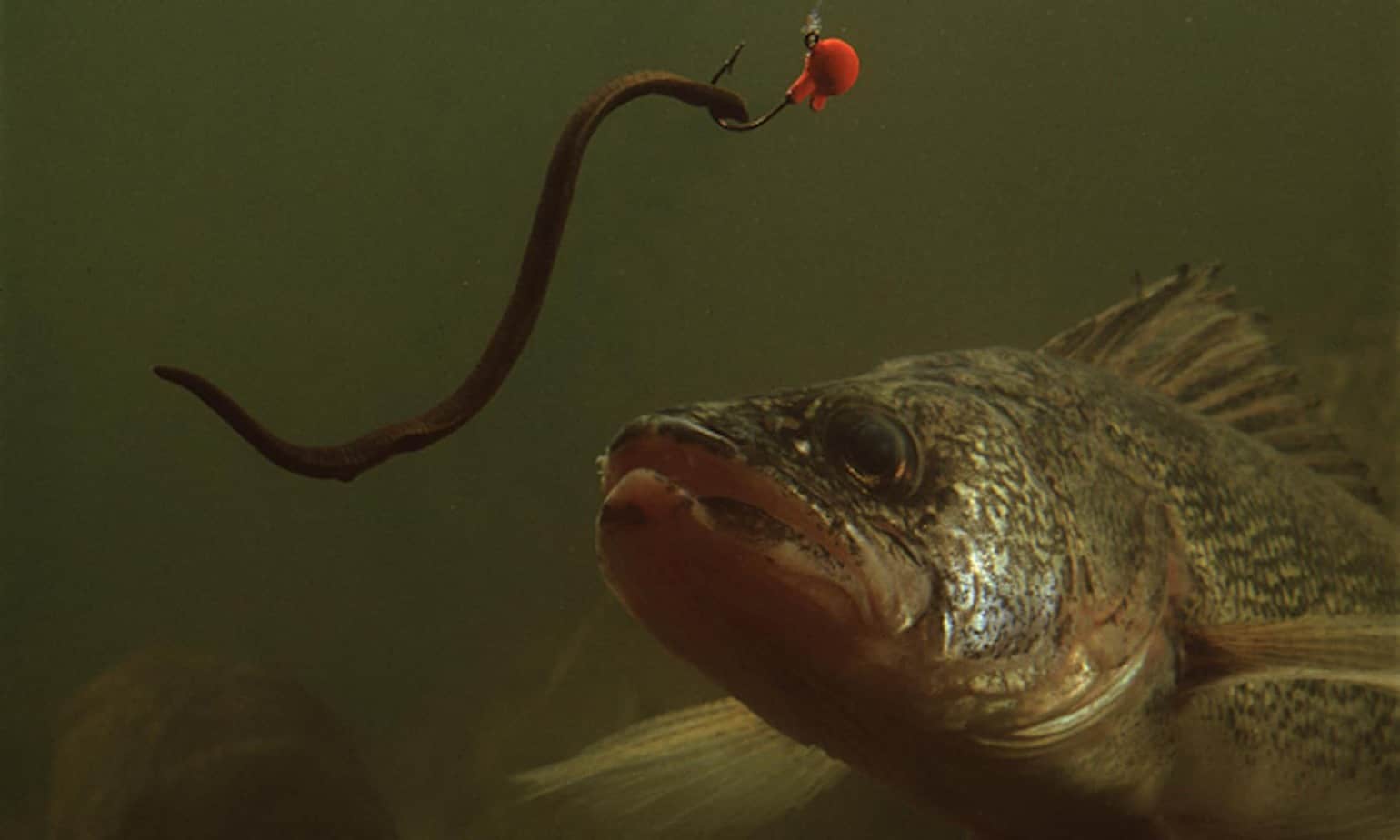
 Nymphs (Spring): The first forage species is one we don't normally associate with walleye, we definitely associate them with trout but never walleye. That food source is nymphs or insect larva. Nymphs are widespread throughout all walleye waters. As a result a large insect hatch can pretty much shut down a walleye bite for more than a week on certain waters.
 Worms (year round): Earthworms have been the quintessential fishing bait since the beginning of time. As a result earthworms are one of the most commonly used baits for walleye.
 Leeches: Leeches and walleye fishing go together like kids and candy. I don't know a walleye fisherman that does not recommend using leeches as bait at one point in the season or another. Leeches are hardy and stay active on the hook for a long time attracting bites even when you're not trolling.


 A minnow by any other name is just a same. Not true, the name minnow is often a general term thrown out there to explain any small fish that can be used as bait. For that reason we are gonna keep with that definition. Pretty much any small baitfish including but not limited to actual minnows and shiners are at the top of the walleyes meal list.
 Round Gobies (year around): If you live anywhere in the great lakes. you are aware of the round goby. An invasive fish native to Europe and the Baltic Sea introduced into the great lakes in 1990 by sea going ships traveling through inland waters. The round goby has quickly established itself as public enemy number one of the DNR and anglers who fish the Great Lakes water shed due to their nasty desire to eat the eggs of native fish species. However in the last few years anglers have begun to notice that large gamefish species, like walleye, have learned that gobies are definitely on the menu.
  Northern Lake Herring (Cisco or Tullibee): With a range starting at the lower great lakes flowing north into northern Canada, cisco are a staple for northern walleye. In the north country they are the quintessential gamefish food as they get to a relatively large size and are soft rayed making them easy to swallow. In areas where cisco are a part of the ecosystem anglers troll large minnow shaped crankbaits in order to match the hatch.
  Gizzard Shad: With a range covering more than 60 percent of the united states, shad are one of the most widespread baitfish species. For this reason they are a forage for walleye and other gamefish in most U.S. When using shad to find walleye, seek out dams with a decent flow as the shad will ofter gather there and hungry walleye will undoubtedly be close by. Another way to catch walleye on the shad bite is by trolling shadraps or flicker shads just below large schools of shad in open water. Lastly the spring shad spawning runs, often coinciding with walleye runs, will always keep predator fish of all species close by gorging on the abundant shad.
.jpeg)

When thinking of Michigan fishing the average angler thinks of things like Detroit river walleye, Lake St. Clair muskie or great lakes salmon fishing. What you do not think about are flathead catfish.
However I'm happy to say that for one Indiana angler congrats are due as that's exactly what he thinks of. Lloyd Tanner of Indiana states, "I've been fishing in Michigan for almost 30 years. What draws me to Michigan is the fishing for big catfish." Apparently Lloyd knows something that many of us do not, big flathead catfish roam Michigan waters.
As a result of his drive to chase Michigan flatheads we all need to congratulate Mr. Tanner on braking the Michigan state record for flathead catfish. His fish weighed in at 53lbs with a length of 48 inches, knocking out the previous record of 52 lbs, 46 inches. Mr. Tanner landed his fish while fishing with cutbait on the St. Joseph river, a tributary of Lake Michigan.
So our hats are off to you today Lloyd Tanner, congrats on breaking the state record and tight lines.

Ludington: Chinook were caught at Big Sable Point and straight out in 80 to 190 feet of water when fishing 30 to 80 feet down. Green and blue spoons and flies worked best. In the mix came a few lake trout. Pier fishing was slow.
West Grand Traverse Bay: Lake trout were caught jigging and trolling off of the red buoy on the west side of Marion Island and also off of Stony Point. Smallmouth bass fishing was very slow.
East Grand Traverse Bay: Smallmouth bass fishing started to pick up, with some anglers catching 10 to 20 bass per trip. No bedding activity was reported yet. A few cisco were caught in front of Yuba and Deepwater Point in 30 to 60 feet of water. Jigging or casting worked best.
Manistee: Anglers caught some Chinook straight out along the shelf and south towards Big Sable

Onekama: Anglers in the barrel were reporting small Chinook around 80 down and lake trout near the bottom on Spin-n-Glos.
Frankfort: Anglers were reporting Chinook in the area with majority of them being young ones. Anglers were trolling out front in 180 to 220 feet of water and working 80 to 100 down. Blue and green spoons were working best. A couple steelhead were also reported near the surface. Water temperatures were slow to rise but the numbers of alewife were still high in all areas.
For a list of bait and tackle shops in the Frankfort area: Click Here!

Tawas: Some smallmouth bass and rock bass were caught on the pier while casting body baits, crawlers and plastics. There were some lake trout, walleye and Chinook salmon caught outside of buoy #2 in 50 to 70 feet of water while trolling spoons and body baits. At Gateway Park on the Tawas River, there were some smallmouth bass, and pike caught while casting spinners, body baits and crawlers. There was a lot of bass fishing activity with anglers catching and releasing smallmouth and largemouth bass, while casting spinners, body baits and plastics near shore as well as out near the rocks on Tawas Point.
Alpena: Lake trout anglers were catching limits mostly in 30 to 70 feet of water. Lake trout were found throughout the water column. They were running a couple of lines near the bottom with flasher and Spin-n-Glos then spoons in the water column. Atlantic salmon should be starting. Anglers wanting to target them should fish the top half of the water column focusing on the top 30 feet or so. Try running smaller spoons in bright colors. Walleye fishing was slow out in the bay.
Au Gres: There was some good walleye fishing with some limits caught in 25 to 30 feet out near Point Au Gres and south, while trolling crawlers and body baits. There were some limits of walleye caught in 10 to 15 feet down near the Pine River and south toward the Pinconning and Saganing bars. There was a lot of bass anglers catching and releasing smallmouth and largemouth bass near shore as well as out near the Charity Islands, while casting spinners body baits and plastics.
Presque Isle: Anglers have done well fishing for Atlantic salmon in the top 50 feet of water on smaller spoons. Bright colors seemed to be the best - oranges, silver, bright greens, golden yellow or any of these combos. Anglers should fish structured areas for best results for lake trout. The lake trout were caught on dodgers and Spin-n-Glos along with brightly colored spoons with lots of green on them.
Rogers City: Lake trout fishing was descent with limits caught. Anglers were still having some days where they have to work harder for them than others. Lake trout love gobies and they were eating them heavily. Anglers should fish areas that have rocky bottoms or areas of structure. Best depths have been 35 to 60 feet of water. Lake trout were all over the water column as well. Anglers were using green, lime, blue or chartreuse spoons as well as cow bells with Spin-n-Glos or dodgers with Spin-n-Glos. Atlantic salmon should be around, fish the top part of the water column with smaller spoons.


