Showing posts with label water. Show all posts

Tuesday, February 4, 2014

How to Use Straws For Waterproof Camping Storage


If you've spent any time in the outdoors where you were required to pack in to a given location then you know that limiting weight, saving space and water proofing are a must. So how do you get everything you "need" into your campsite whether you're hiking or canoeing in.  This is especially true when it comes to luxuries like cooking spices and necessities like fire starting agents such as matches.
Well, one of the simple tools I use to get small items into camp safe compact and dry are basic straws.  I personally store my cooking spices, matches, Vaseline soaked cotton balls and neosporin inside sealed straws when backpacking, kayaking or canoeing into my campsites.  Note: Make sure you label your straws with a needle nose sharpie so you don't mix up things like toothpaste and neosporin.  I don't think you'll like the taste...  Overall this is a very simple tool to make so below I'll show the simple steps of how to make straws into simple storage devises.
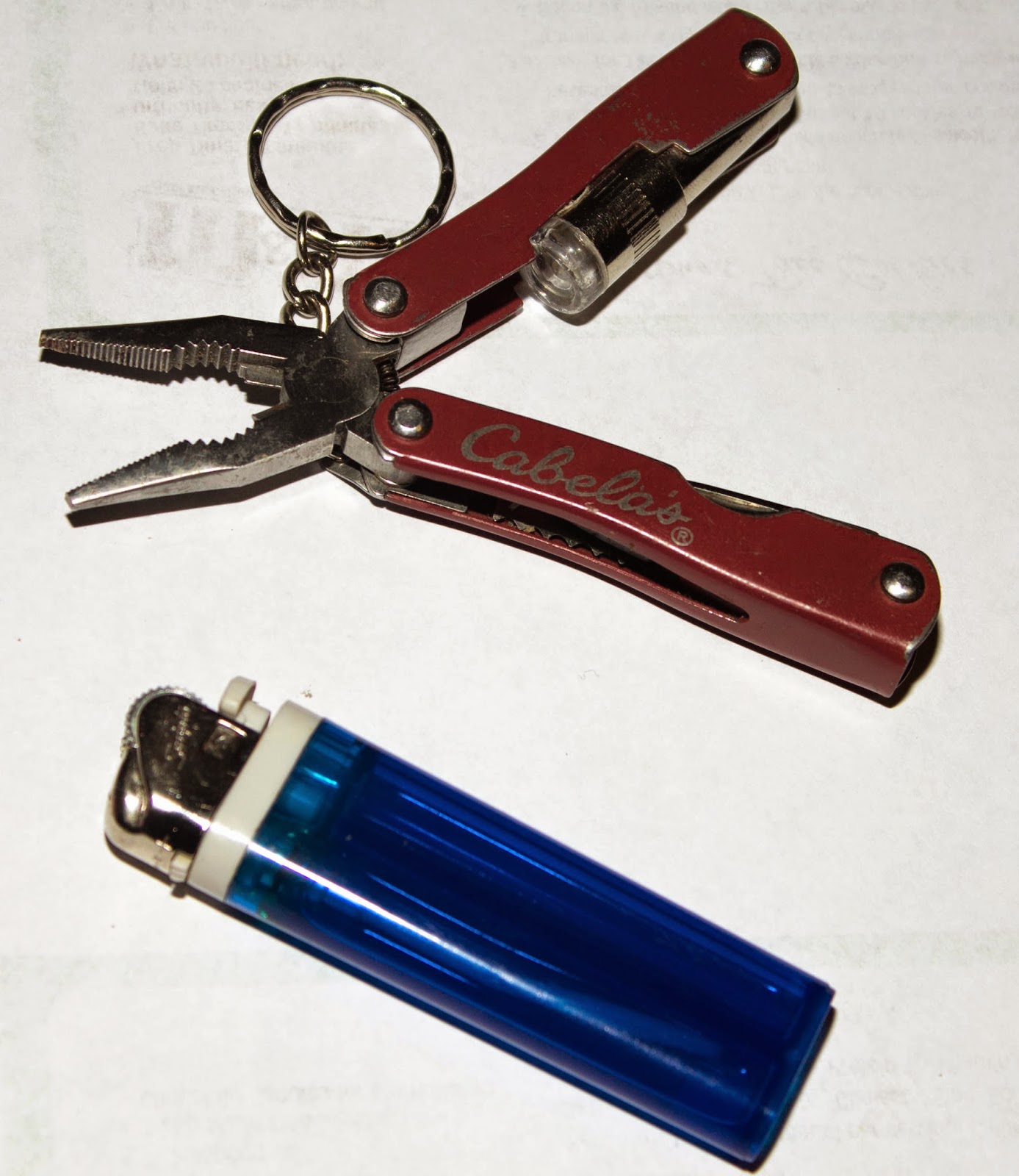
1. Assemble the tools needed to make your storage straws. A simple lighter, needle nose pliers (or small pliers of any kind) and a pair of scissors will be needed. 

2.  Cut the straws to whatever length you'd like.  I personally cut them pretty short in order to store spices in single serve sizes for camp meals. 

3. Pinch one end of the cut straw with your small pliers and burn the exposed tag end briefly in order to get the end to seal. (You may have to pinch the tag end with your fingers to seal it completely)

4. After having one side sealed place whatever you want to keep dry inside of your mini-container. Ie. toothpaste, spices, matches or anything else you can think of that you want to keep dry.

5. Repeat step 3 sealing the opposite end of the straw thus protecting its contents from the elements.

Here is a video of the actual process just to make learning this a bit easier:

Tuesday, October 1, 2013

Understanding Topwater Baits


Ask any angler what their favorite way to fish is and odds are your answer will be topwater fishing. Why? Because there is nothing like seeing a fish explode out of seemingly no where to engulf your bait.   The adrenaline rush it gives anglers is unparalleled and will have you eager to throw your bait back in the water after landing that fish.                

Not only that but depending on what bait you're using topwater baits give you a great way to fish areas blanketed with fish harboring weeds and lilly pads.  So just to simplify things a bit for you here is a list of the different types of topwater baits available.

Hollow Frogs & Rats:  Hollow bodied frogs and rats are probably the ultimate lilly pad fishing bait. This is due to the fact that they are weedless and easily crawl across weed mats and pads producing a big silhouette for fish to see from the underside of pads.  Don't be afraid to tie a frog or rat on and give it a whirl, fish love them and trust me you will too.


Poppers:  Poppers also known as chuggers and spitters have concave faces that cause them to pop, gurgle or spit water when you twitch them.  Unlike frogs and rats poppers are not weedless and need to be fished in relatively open water or in water where the tops of weeds haven't reached the top of the water yet (I've had great success in this case).  Poppers are retrieved with a series of rapid twitches but don't be afraid to vary it up.


Stick Baits (Walkers):  I believe the Zara Spook might be the most widely used stick bait there is on the  market.  It's cigar shape and weighted rear end allows it to have a walk the dog (side to side) action as your twitch the bait.  Stick baits are also baits for open water or waters where the weeds have not reached the surface as they, like poppers, have treble hooks at the front and rear end.


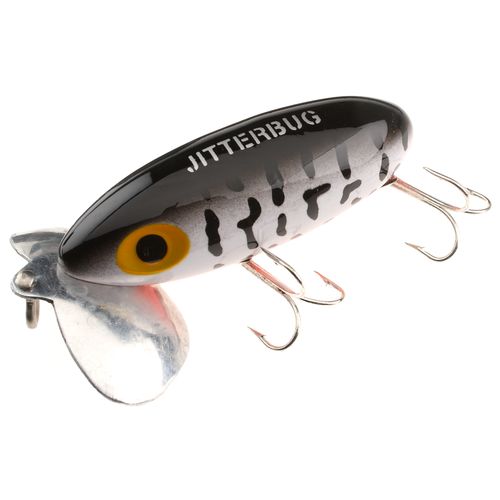
Crawlers: The Jitterbug is the standard for crawling topwater baits.  The wide concave lip causes the bait have a side to side action accompanied by a "plop plop" sound that fish can't resist.  Simply cast it into open water or waters that have weeds below the surface and hold on.  Crawlers are great baits for night time, heavily overcast and rainy day fishing.

Propbaits:  Propbaits look similar to stickbaits with a more narrow profile and small propellors at each end. They're fished with twitches and frequent pauses that make props spin simulating feeding baitfish.  Like many others on the topwater list they are good for open water and water with below surface weeds.


Buzzbaits:  Buzzbaits are great baits for covering large amounts of water within a short time.  They have a large propellor like blade that throw a lot of water making the buzz sound across the surface. Retrieve them slowly and steadily as they sink when you stop reeling.  As well you want to retrieve the slowly in order to keep the bait in the strike zone longer avoiding missed strikes.


Topwater baits are a great choice for fishing as any fisherman will tell you.  However don't get drawn in to the belief that they are only a bass fishing bait because almost all fish will take bait off of the top you just have to chose what they want.  In fact my preferred method of fishing for panfish is with a small flyfishing popper or a foam spider.

Thanks for reading
Kwan


Sunday, September 22, 2013

Understanding Gamefish By Temperature Pt1

We all know and understand that fish are cold blooded animals.  However, despite this fact we as fisherman and women must understand that fish are often divided by biologist into three different categories: warm water fish, cool water fish and cold water fishes.

Right now I'm only gonna talk about one group and that is the warm water game fish group.  This group of fish which includes a large group of panfish and catfish prefer water in a range from 70 to 80 degrees fahrenheit.

As anglers we must all understand that the temperature preferences of our quarry is only one piece of the puzzle that helps us locate and effectively fish for them. Remember fish must eat and many of their movements are dictated by their forage at that moment.

As well seasonal temperature changes will adjust the behaviors of many of these warm water fishes as many of them live in waters that seasonally ice over. For example catfish readily live in lakes that ice over however during this time of colder than preferred temps their metabolisms slow and they become less aggressive and active in order to survive the colder temperatures.

On another note many of the larger warm water game fish begin to spend more time in colder water as they age and get larger.  So remember, understanding the temperature preferences of game fish is just one valuable piece of the puzzle to making a better angler.

Next weeks post will cover cool water gamefish and the following week will cover cold water fish.  So Stay Tuned!

Thanks for reading!
Kwan

LinkWithin

Related Posts Plugin for WordPress, Blogger...