Saturday, February 22, 2020

2/20/2020 Southeast Lower Peninsula, Michigan DNR Fishing Report


To access the original Michigan DNR fishing Report: Click Here!
Detroit River: Boat anglers have caught yellow perch in Airport Bay. They are sorting through the small ones but still getting a few keepers. Those fishing the canals around Gibraltar are also getting some fish.
Huron River: Boat and shore anglers are getting steelhead on Hot-n-Tots, small jigs with wax worms and black flies.   
Oakland County: Had ice; however, some of the inland lakes still had open water and thin spots, so caution needs to be used. Melted snow has created a layer of secondary ice and slush on the existing ice. Anglers could be found on a few of the small inland lakes in the northern end of the county. They caught panfish and northern pike. The bite was not really aggressive. Best time slots were before 11 a.m. and after 3:30 p.m. The early morning bite for pike improved when using a tip-up with a golden shiner.    
  • For more public lakes to fish in Oakland County: Click Here! 
  • Oakland County Bait Shops: Click Here!
Lake St. ClairNot much has changed as there is still some ice in the areas that have been holding on. Conditions are highly variable with the constant freeze/thaw cycles, and extreme caution needs to be used. Catch rates were slow as these same areas have been fished extensively because of the limited ice coverage.
  • For a more accurate report on Lake St. Clair I suggest reaching out to the people at Sportsmen's Direct  as their weekly LSC fishing report is usually far more in depth.  Phone: (586-741-6052)
  • Macomb County Bait Shops: Click Here!

Saginaw Bay: Ice conditions still vary throughout. Those fishing off the county park in Pinconning caught a few perch with jigs and minnows in 5 feet. A couple pike were also caught. At Linwood, anglers were only getting out a short distance, and catch rates were minimal. Those walking off the state park were on questionable ice, and open water could be seen from the parking lot. Some are walking straight out; some are fishing near the Kawkawlin River or heading out to the first main pile of ice before the open water starts. The ice is not safe beyond this point. Fishing was very slow, with just a couple walleye or whitefish taken by those jigging a Swedish pimple tipped with a minnow. Anglers were out from Sebewaing to Bay Port; however, ice conditions vary. Overall fishing was slow, with only a few pike caught in the marinas or near shore. Some perch were caught out of Mud Creek, but most were small. A couple walleye and lake trout were caught, but the overall fishing was slow. Ice formed once again at the pier in Caseville, and a few anglers fishing off the parking lot caught a couple lake trout. Use caution as the winds have moved the ice in and out at Caseville all winter.

  • For a more accurate report on Saginaw Bay I suggest taking a look at the weekly Saginaw Bay Fishing Report given to you by Saginawbay.com
Saginaw RiverHad ice. Boats could only get out in a few small areas at Zilwaukee and the Saginaw Marina at Rust Avenue, but they were breaking ice to do so. With all the ice, piloting a boat was somewhat difficult. A couple walleye were caught when they could find open water, but the overall action was slow.    
Tittabawassee RiverHad ice, and the boat launches were not usable as there was a lot of shore ice.

Below are links to bait shop listings organized by county:  

Your area may not be listed within this fishing report so below is a list of links to pages in Southeast Michigan to help guide you to public lakes in your county.

Clinton County Public Lakes: Click Here!
Genessee County Public Lakes: Click Here!
Hillsdale County Public Lakes: Click Here!
Jackson County Public Lakes: Click Here!
Lapeer County Public Lakes: Click Here!
Lenawee County Public Lakes: Click Here!
Livingston County Public Lakes: Click Here!
Oakland County Public Lakes Page 1: Click Here! 
Oakland County Public Lakes Page 2: Click Here!
Washtenaw County Public Lakes: Click Here!
Wayne County Public Lakes: Click Here!

Friday, January 24, 2020

Smeltdown: Small Fish Continues Vanishing Act (Repost)


Hey everyone, I'm posting this article about the Lake Erie rainbow smelt population from the Detroit FreePress because it related to a walleye article I'll be posting soon.   To see the original Free Press article Click Here!


Tom Durecki remembers the glory days for smelt fishing — or smelting — in Michigan in the 1970s.
"The smelt are running!" was a call that sent fisherman scrambling to Michigan rivers and streams to dip nets and catch buckets full of the silvery fish as they moved into tributaries to spawn at the onset of spring — right around this time, every year.
"It was absolutely fantastic," said Durecki, owner of Tom's Bait and Tackle Shop in East Jordan. "Even into the '80s, we'd go up to Carp River in the U.P. and you'd get what you wanted in an hour — five, 10, 15 gallons."
Those days are gone. The smelt population has declined so much, so quickly over the past two decades that most anglers don't even bother trying anymore.
Why it's occurring isn't simple to explain. Researchers said they think the arrival in the Great Lakes of invasive species like zebra mussels disrupted the food chain and plays a role. But it's not the entire answer. Adult smelt today are almost a third smaller than they were less than 40 years ago.

Even more puzzling, a new study shows smelt hatchling survival is improving, but it doesn't seem to impact the dwindling adult population.

The smelt's plight matters, researchers said, because smelt are an important food source for some of the sport fish that drive Michigan's multibillion-dollar fishing tourism industry.

They also can tell scientists key things about the Great Lakes through their behavior, such as about water temperatures that contribute to harmful algae blooms in Lake Erie.

"People ask about it every spring: 'What happened to the smelt?' " said Michigan Department of Natural Resources fisheries biologist David Clapp, who is based in Charlevoix.

There's no simple answer, and the mystery in some ways is deepening.

"Trying to explain it is not that easy," said Chuck Madenjian, a research fishery biologist with the U.S. Geological Survey's Great Lakes Science Center in Ann Arbor.

"There's nothing really that obvious about what's driving that pattern."

Invasive species
Like so many fish people associate with the Great Lakes, the rainbow smelt is an invasive species. The approximately 6-inch fish is native to the Atlantic and Pacific oceans, but moves into freshwater to spawn.

It was first stocked in Crystal Lake in Benzie County in 1912, after several unsuccessful attempts to stock smelt in the St. Mary's River to support another transplanted fish, Atlantic salmon. Smelt were found in Lake Michigan in 1923 and then spread throughout the Great Lakes.

Smelt quickly thrived in their new freshwater home. The commercial harvest of smelt on the Great Lakes reached 4.8 million pounds by 1941. The population showed large fluctuations over the years, impacted by lamprey eels and the emergence of whitefish and lake trout.

Some 94% of smelt harvested from the Great Lakes come from Lake Michigan — on both the Michigan and Wisconsin sides. It was around 1993 when smelt stocks began to plummet.

The Great Lakes Science Center does annual prey fish surveys in the lakes, trawling the lake bottom and counting what they find. Their 2013 survey found 11 juvenile smelt — smelt less than a year in age — per hectare, an area of 10,000 square meters. That was only 6% of the long-term average count.

"Rainbow smelt biomass in Lake Michigan during 1992-1996 was roughly four times higher than rainbow smelt biomass during 2001-2013," scientists from the Science Center wrote in a report on Lake Michigan prey fish populations last year.
Clapp pointed out that the start of the decline coincides with the arrival and spread of zebra mussels in Lake Michigan.

"That changed the reproductive and nutrient dynamics of the lake," he said.
Smelt eat zooplankton, small aquatic shrimp-type creatures, and they have declined significantly over the same time period, Clapp said.

But that's not a perfect answer, Madenjian said.
"We don't know why smelt would be affected, but not a lot of other species," he said.

The take by anglers also doesn't fully explain the drop, Madenjian said. Nor does larger fish, such as salmon and lake trout, preying upon smelt, he said.

"The amount of predation on them by salmon and trout was bigger in the 1980s than the 1990s, and yet the big drop was in the 1990s," he said. "You begin to doubt that predation was a driver."

Cannibalism?
The plot further thickened with research out of Purdue University that shows smelt offspring survival is rising in Lake Michigan, but with no impact on the adult population of smelt, which are now on average 2 inches shorter than they were in the 1970s — down to about 4.5 inches in length.

"Traditionally, the ratio of the number of offspring that survive and the number of adults that are around is pretty constant," said Zachary Feiner, a doctoral candidate in Purdue's Department of Forestry and Natural Resources, who was part of the research team.

"We saw that the number of offspring was increasing. It was really unexpected, especially since adults are smaller, so they should be laying fewer eggs, and laying worse eggs.

"We really don't have an answer for it."

One theory: Smelt are known to engage in cannibalism on their hatchlings. With fewer adult smelt, the juveniles have a chance to thrive.

As scientists continue to seek answers, Feiner outlined why it matters.
"Smelt, alewives, they were invasives. Now they're supporting a multibillion-dollar fishery," he said. "These are the forage fish at the base of the food chain."

Smelt also illustrate how the smallest plant and aquatic life in the Great Lakes are changing, Feiner said. And as a fish that likes colder water, they can show how stratification — changes in a lake's water density and temperature — is changing on Lake Erie, where algae blooms have sparked drinking water crises in recent years.

"Smelt can be a canary in the coal mine in a few ways," he said. "They can tell you what's going on in the environment."

Monday, December 16, 2019

Product Review: Vimov Saltwater Fishing Pliers


Company Description:  Vimov Saltwater Fishing Pliers (2 Pack), Stainless Steel Titanium Plated Multi Tool 


Image result for VIMOV Saltwater Fishing Pliers (2 Pack), Stainless Steel Plating Titanium Multi Tool (Hook Remover, Braid Line Cutter, Split Ring Opener) for Saltwater Angling, Kayak and Boating

Multiple Function: The fishing hook cutter can remove and repair hooks, cut steel leaders, hold tiny line and open split rings. The pliers are also capable of cutting, stripping, pulling and crimping as well. With the Vimov pliers you have the option to change treble hooks on crankbaits or clamp sinkers. Besides this these pliers can be a backup for a knife in case of fishing line entanglement when scuba diving. 


  • The titanium plating process makes these fishing pliers corrosion resistant, colorfast, UV resistant under use in saltwater and other harsh environments.
  • Small Jaws of the split ring pliers are designed to hold the tiny hooks and grip thin fishing lines firmly. 
  • Hard and solid line fishing hook cutter is sharp enough to cut braid, mono filament, fluorocarbon, fly line and nanofil.
  • Portable and lightweight: This fishing tackle is only 5 inch long, you can put it in pocket conveniently. Split ring pliers fishing is much more suitable for anglers with small hands, like female or teenagers.
  • Fine Hand Feeling: Ergonomical molded grip handle make the fly fishing pliers very handy to carry and make you work efficient and freely.


Features:
Titanium Plating Process: This fishing multitool is corrosion-proof, corrosion-proof and high hardness. It doesn't matter if you're fishing in saltwater or in a pond the Vimov fishing pliers are a handy tool to have with you.

Lightweight: At just over 2 ounces, they can be conveniently taken anywhere.

Comfortable Handle allows for use without fatigue or slipping.


Specs:
Color: Black
Material: Stainless Steel& Plastic
Length: 5 Inch
Craftmanship: Plating fishing pliers titanium
Weight:2.11 oz
Package Include: 2*(Fishing Pliers+Nylon fishing pliers sheath)


Price: 16.99 for 2 Pack

How I used: Initially I purchased the Vimov pliers to check out their qualiy.  As well as to see how they would hold up to everyday usage. However when I received the pliers I noticed that they are much smaller than a normal pair of fishing pliers at only 5 inches in length. Which in turn limited the scope of their use in my eyes. 

Normally I carry two pair of needle nose pliers with me in case I need to remove hooks from fish or anything else.  One pair is a simple pair of hemostats and the other is heavier pair of needle nose pliers. The Vimov pliers have taken the place of my smaller hemostats as they are small enough to serve the same purpose with a few extra benefits. 

The Vimov pliers are small enough get hooks from deep within the throats of small panfish.  While also picking up some extra duties throughout the day.  The line cutter sharp and efficient enough to cut braid, mono and flourocarbon with no problems.  I didn't have a reason to try out the hook cutter on the pliers but from what i can tell it will do fine cutting light wire hooks but not thicker hooks that you may use for saltwater or bigger catfish. 

The split ring pliers works great on the small split rings that standard pliers tend to be too big for. While the split shot closers are perfect for small size 00 split shot used for fly fishing. And what's better? They come in a two pack so I can keep one on me and the other in the kayak as a part of my kayak tool kit. 

Overall the Vimov pliers have surpassed my expectations when it comes to functionality and coming in a set of two. However there is one thing I've found to be a problem with the Vimov fishing pliers that is they're fragile based on their design. Most multipurpose fishing piers have one thing in common and that is they all have a triangular shape. As a result most plier manufactures leave no empty space between the fulcrum and tip of the jaws which causes the two sides to rest flush atop of each other when the pliers are closed.  This simple design was missed with the vimov fishing pliers leaving a weak spot where the pliers don't meet.  As a result if gripped too tightly you'll get stress breaks in this spot.  In fact if I squeeze them too tight I can see the metal bend just a bit. 


Review: I would definitely recommend the Vimov fishing pliers to anyone who ask.  However I would recommend them as a back up tool rather than a primary pair of pliers.  This is due to the size which makes them uniquely agile when it comes to unhooking smaller fish but they don't offer the length needed to unhook a deeply hooked larger fish. 

The multitool functions of the pliers are awesome giving you one more reason you'd be happy with this pair of pliers on your hip.  All of the tools function as needed which will only make fishing easier. 

I haven't had any issues with corrosion as of yet so I can not speak to how corrosion resistant they are. However I try to keep all of my fishing tools clean at all times. So I believe they'll hold up great for me under normal usage.

The overall strength of the product is the only aspect of the Vimov pliers that I call into question. So if you do purchase a pair make sure you try not to be too heavy handed with the pliers.

Pros: Corrosion resistant, lightweight, small enough for small hands, multifunction; small enough for removing hooks from the mouths of smaller fish; a good backup pair for larger pliers

Cons:  Not very strong can break when used with too much force.

Monday, December 2, 2019

How to Tie a Basic Marabou Jig


In every anglers tackle box you'll have tackle that is species specific.  Then again there are those baits that you believe are species specific but the reality is they are not.  The marabou jig one of those baits thats often prejudged as being only for crappie.  When in fact marabou jigs are often used for other species like white bass, hybrid striper, walleye and smallmouth bass. Because they are so versatile i've taken the time to learn how to tie my own marabou jigs and below is a quick overview of how you can tie your own.

Tools you'll need:

Vice: Pretty much any fly tying vice will work.  You don't have to invest in anything expensive to tie jigs of any kind. You just need a vice that will hold the jig heads tight enough for you to wrap in your materials. 


Bobbin& Thread: The next tool you'll need to tie your own jigs will be a bobbin a color and thickness thread of your choosing.  A simply a tool designed to hold thread while wrapping thread onto your hooks or jigs. 


Whip Finish Tool: A whip finish tool is what you'll need to tie your finishing knots to complete your jigs.  If you don't know how to use a whip finish tool there are plenty of videos on youtube that will give you a quick tutorial. 

Once you have your tools assembled the fun begins. Because this is the point at which you pick your materials and color patterns for your marabou jigs.  In this case I used chartreuse, black and pink. Below is the list of materials I used but you're not limited to my list.

Thread:  The thread is used to tie in each of your materials on to you jigs.  I personally use 210 flatwax denier for tying jigs as its thin enough to not make small jigs too bulky and strong enough to tie larger jigs from striper and walleye.  I pick my colors solely based on what patterns I'm tying.

Jig heads: The jig head you choose is also gonna be based which pattern you're tying.  For basic marabou jig patterns a collarless round head jig sizes from 1/80oz and up will work great.  However for smaller sizes like 1/64oz and 1/80oz you'll want to use a thinner diameter thread like a 140 denier.

Chenille:

Marabou:


Flashabou:


Hard as Nails: 

1. Place jig head in the vise

2. Starting at the base of the jig head wrap thread over itself back to a point just above or before the hook point. 


3.Measure your marabou tips to match the length of the jig head. Then wrap that portion into the jig head by wrapping thread up the shank of the hook then back down in order to smooth out the body. 

4. Wrap in 3 or 4 strands of flashabou up one side of the hook shank then wrap it around the other side making a loop which will hold the flashabou in tightly along each side of the tail.


5. Pull some of the chenille fibers off of the holding thread and wrap the holding thread on to the hook shank, wrapping the thread up to the jig head. 

6. Wrap the chenille up the hook shank in the opposite direction of what the thread has been wrapped. 
7. Once the chenille is wrapped to the jig head, cut off the tag end and wrap down the chenille with about 4 wraps. 

8. Finish up your tie with 3 whip finish knots. 

9. Finally use a straightened paperclip to adhere Sally Hansen Hard As Nails to the thread knots in order to harden them and further strengthen your knots. 


This is probably the easiest jig to tie for multi-species fishing.  Comment below if you have any experience with fishing with marabou jigs for crappie or any other fish. 

Saturday, November 9, 2019

11/06/2019 Northwest Lower Peninsula Michigan Fishing Report


Rain, snow and extremely cold temperatures have kept most anglers at home. Those braving the elements have caught some walleye on the inland lakes. Pier anglers are getting steelhead, whitefish and the occasional walleye. Check out the waters that hold muskie and northern pike in your area as this is the time of year to catch both species. 


Northwest Lower Peninsula

To access the original Michigan DNR fishing Report: Click Here!

Overall: All the rivers were running high. There should be some steelhead in area rivers however very few anglers have been out.
Crooked Lake: In Emmet County, a few anglers were looking for perch.
Petoskey: Some anglers were targeting steelhead off the clock dock; however, the last report was no fish were caught. Those shore fishing just past the mouth of the Bear River caught a couple lake trout that had be released as the season is closed.
Platte River: The egg-take operation in the lower river is finished. Staff plan to remove the lower weir on November 14.

Manistee: When they could get out, pier anglers continued to target steelhead when using fresh spawn. A few whitefish were hitting on salmon eggs or wax worms.
Manistee River: Flow is a bit high and steelhead fishing was fair. Water temperatures below Tippy Dam were in the mid to high 40’s. Anglers caught steelhead, brown trout and even the odd salmon on flies, beads, spinners and crank baits. Those wading above and below the coffer dam caught a few fish.
  • For Manistee County bait and tackle list: Click Here!

Pere Marquette River: Water levels are up. Those targeting steelhead were getting a few, mainly on flies. Try an egg pattern or a bead.
Related image

Below are links to bait shop listings organized by county: 

Your area may not be listed within this fishing report so below is a list of links to pages in Northeast Michigan to help guide you to public lakes in your county.

11/06/2019 Northeast Lower Peninsula, Michigan DNR Fishing Report

Image result for crawler harness depth chart
Rain, snow and extremely cold temperatures have kept most anglers at home. Those braving the elements have caught some walleye on the inland lakes. Pier anglers are getting steelhead, whitefish and the occasional walleye. Check out the waters that hold muskie and northern pike in your area as this is the time of year to catch both species.


Image result for walleye on crawler harnessNortheast Lower Peninsula

To access the original Michigan DNR fishing Report: Click Here!

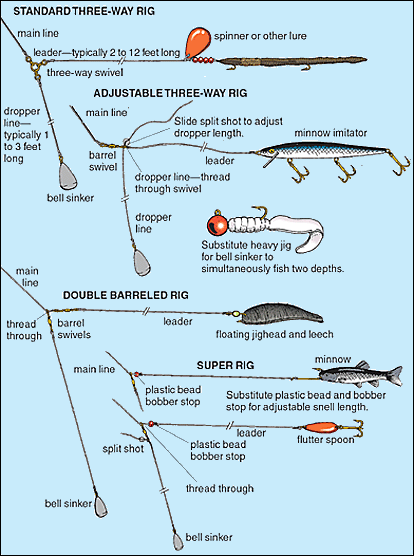
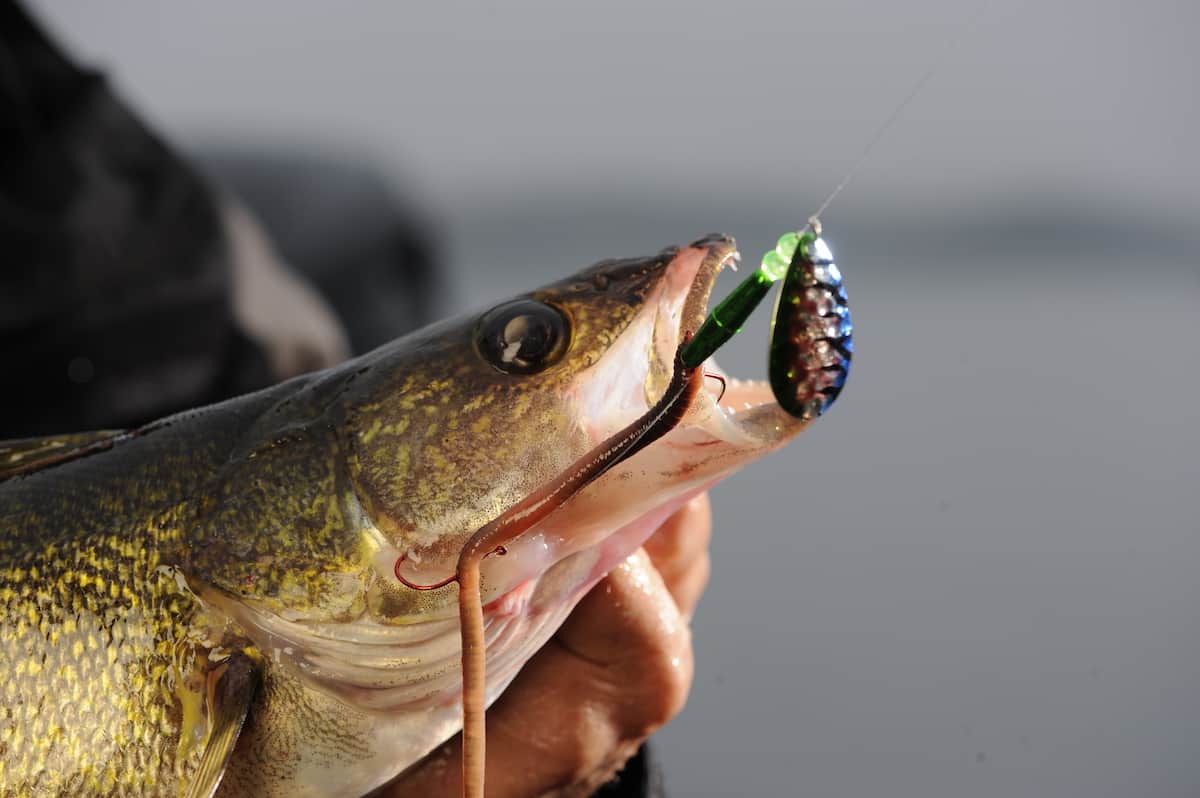
Cheboygan County: A few walleye anglers could be found on the inland lakes. Try Maple Bay or along the east side of Burt Lake. On Mullett Lake, try the south end near the Indian River. On Black Lake, try a crawler harness or casting a body bait on the north end.
Alpena: A few walleye could still be found near the mouth of the river when casting crank baits and jigs. This is the time of year when spear anglers start targeting whitefish.

Thunder Bay River: Those fishing up near the 9th Street Dam caught the occasional Atlantic salmon. Most were drifting and floating spawn however a couple fish were taken when casting spoons and body baits. Walleye were caught in the early morning or evening when casting body baits.

Oscoda: Pier anglers continued to target walleye when casting body baits in the early morning or late evening. The whitefish are slowly moving in and were caught when casting small spoons.
Au Sable River: Anglers were still getting a few Atlantic salmon when drifting spawn bags, casting small spoons and spinners or when stripping streamers. A few more steelhead were caught on flies or spawn bags. The occasional brown trout or brook trout were also caught. Walleye were caught in upper Foote Pond or down near the mouth when casting jigs or body baits.

Houghton Lake: Walleye fishing was picking up, however no anglers have been out. The only boats out were duck hunters. Those fishing near the Reedsburg Dam were getting a few pike but no one has been out lately.

Nearby Bait & Tackle Shops:
H&H Fireworks, Guns & Sporting Goods: (989) 366-0126Tawas: Walleye anglers were fishing near the boat launch and off the State Dock. Early morning or late evening were best when casting lures or still-fishing with live bait.

Tawas River: The occasional walleye was caught down near the mouth.

Below are links to bait shop listings organized by county:  

Your area may not be listed within this fishing report so below is a list of links to pages in Northeast Michigan to help guide you to public lakes in your county.

Alcona County Public Lakes: Click Here!
Alpena County Public Lakes: Click Here!
Clare County Public Lakes: Click Here!
Crawford County Public Lakes: Click Here!
Gladwin County Public Lakes: Click Here!
Iosco County Public Lakes: Click Here!
Montmorency Public Lakes: Click Here! 
Ogemaw County Public Lakes: Click Here!
Oscoda County Public Lakes: Click Here!
Presque Isle County Public Lakes: Click Here!

LinkWithin

Related Posts Plugin for WordPress, Blogger...